case study
Goals in Jira
Context
Before this project, our team owned a combined people, team, goal and project directory for companies. It hadn't found product market fit. But the Jira team was hearing strong signals from their customers that teams wanted to align their day-to-day work to goals so they could be confident they were working on the right things. The problem was that Atlassian's goals experience was completely disconnected from where work was actually tracked in Jira.
I led a product and design spike to explore whether we should pivot to a goals-first approach. I created concepts and tested them with customers: users showed strong willingness to adopt, and many described workarounds they were already using to bridge the gap between their goals and their Jira work. Those learnings gave us the confidence to invest in building the goals integration with Jira as our priority.
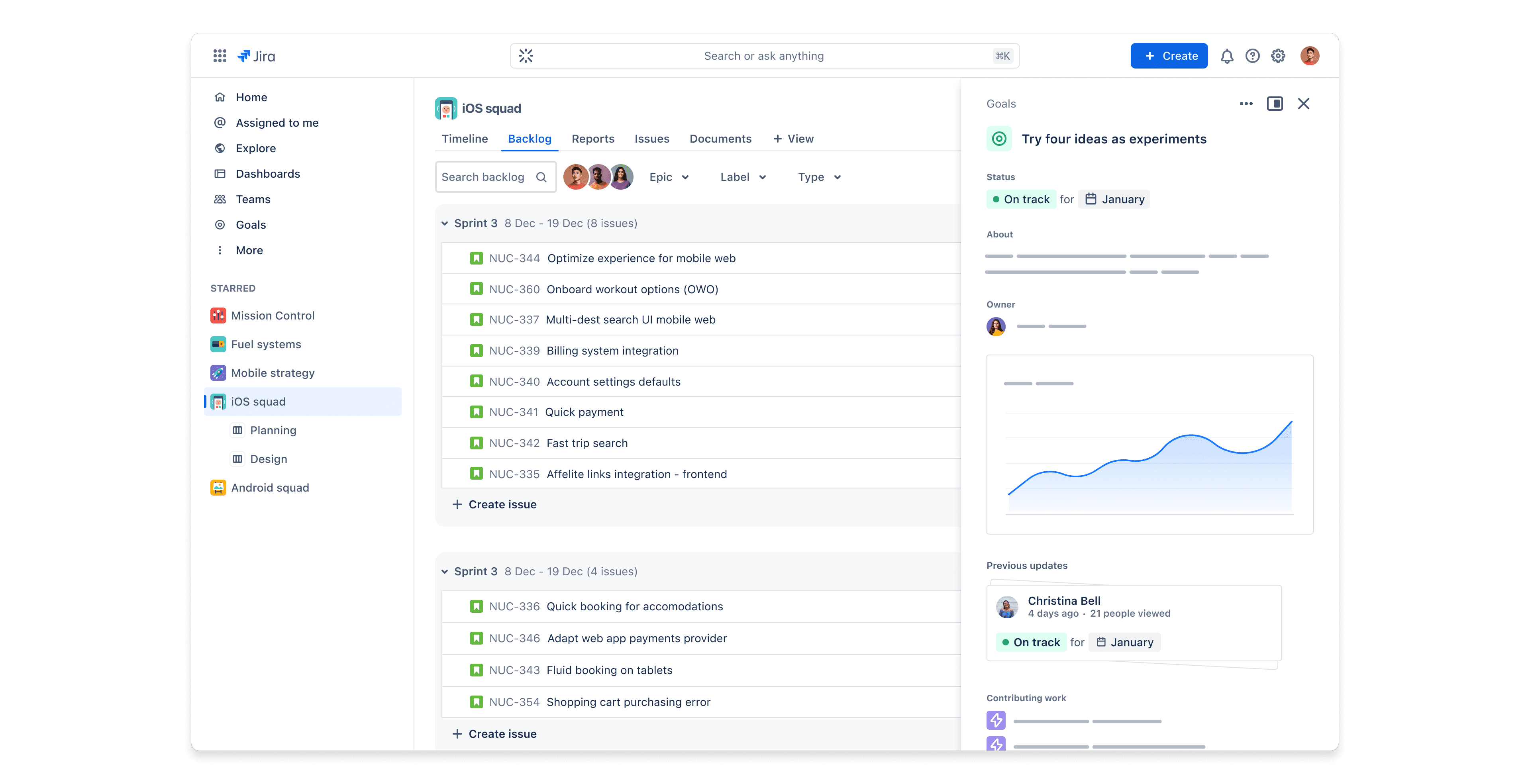
An original concept mock for the goals preview panel within Jira, which I used to position the idea to my own team and our stakeholders within Jira.
Building with components
As I looked at the opportunity, I could see that Jira was just the beginning. Integration with Confluence was on the horizon, along with several new Atlassian apps. If we built a bespoke goals experience just for Jira, we'd end up rebuilding it from scratch every time we integrated with another product.
I championed a component-based approach over other design solutions the team had explored. The idea was to develop a set of reusable components for searching, creating, and linking goals that would feel native wherever they appeared, but could be deployed across products without starting over each time. I collaborated with developers to build a case for this approach and get buy-in from stakeholders across the organisation.
This was a change in tactic for our team, and it required me to influence people outside my immediate group. I produced concept mocks, like the goals preview panel within Jira, to position the idea with my own team first, and then used those same artifacts to align stakeholders within the Jira organisation.
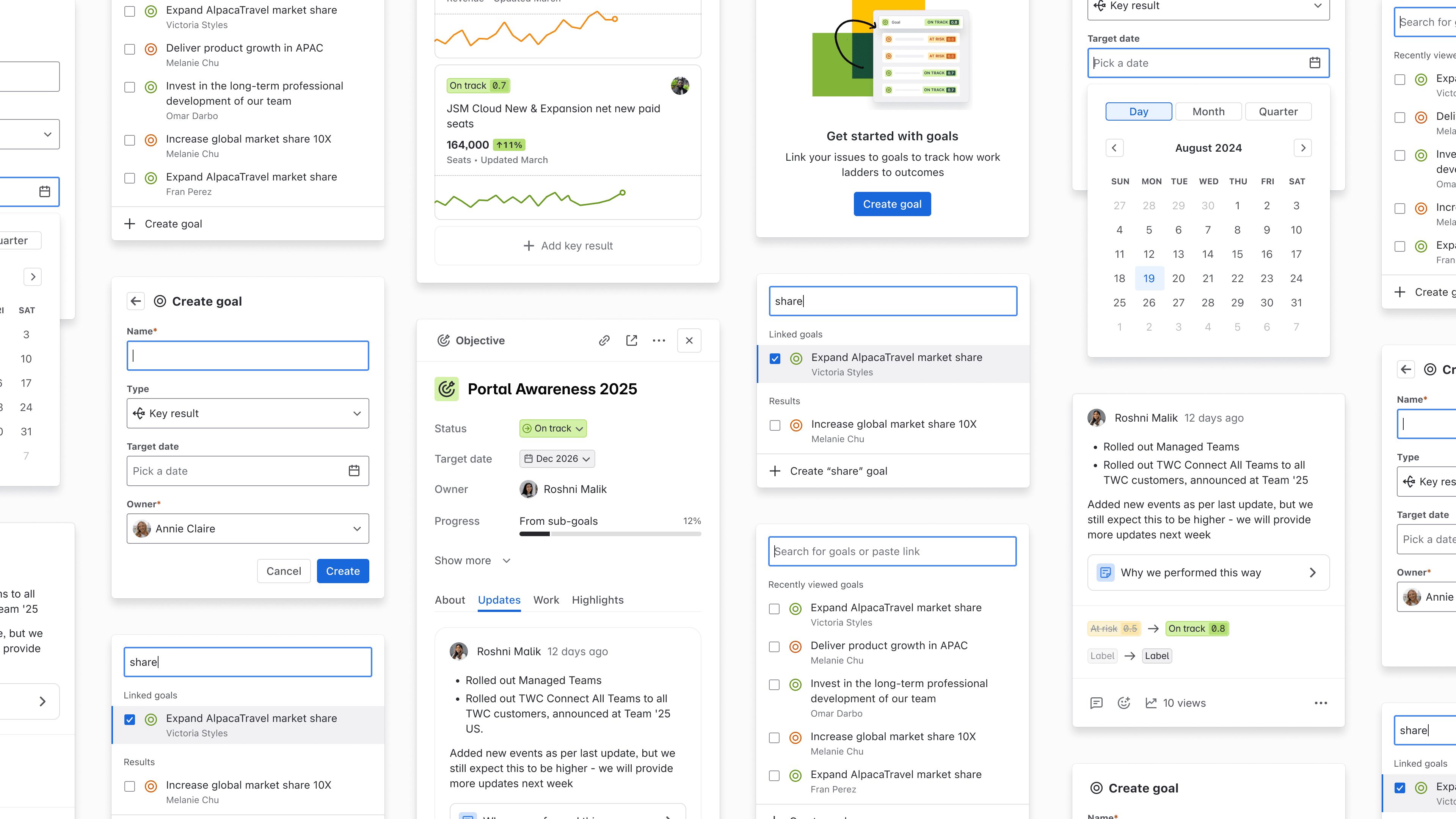
Some of the components used in the integration
Balancing native feel with reusability
The core tension in this project was making the integration feel like a natural part of Jira while building something flexible enough to work everywhere. One example of where this played out: when a user needed to link a goal, we could have simply opened a separate modal since we already had a create goal modal. Instead, I pushed for an inline create-and-link experience that kept users in their flow. It increased scope, but it meant the goals integration felt like a native Jira feature rather than something pieced together from another product.
The component for searching, creating and linking goals which could be used across Jira (the issue detail view, and this table view), as well as being used to link other objects (such as people and projects) and across apps
What we explored and discarded
Not every direction worked out. I explored a dedicated goals directory within Jira, but we ultimately decided against it. Goals needed to live outside of Jira so that users coming from other entry points (such as Confluence, or company leaders who might not be in Jira day to day), could access goal dashboards and look up goals from a single, shared location.
Once we'd narrowed the scope, I produced end-to-end journeys for testing, along with complete component designs that could be handed off to engineering.
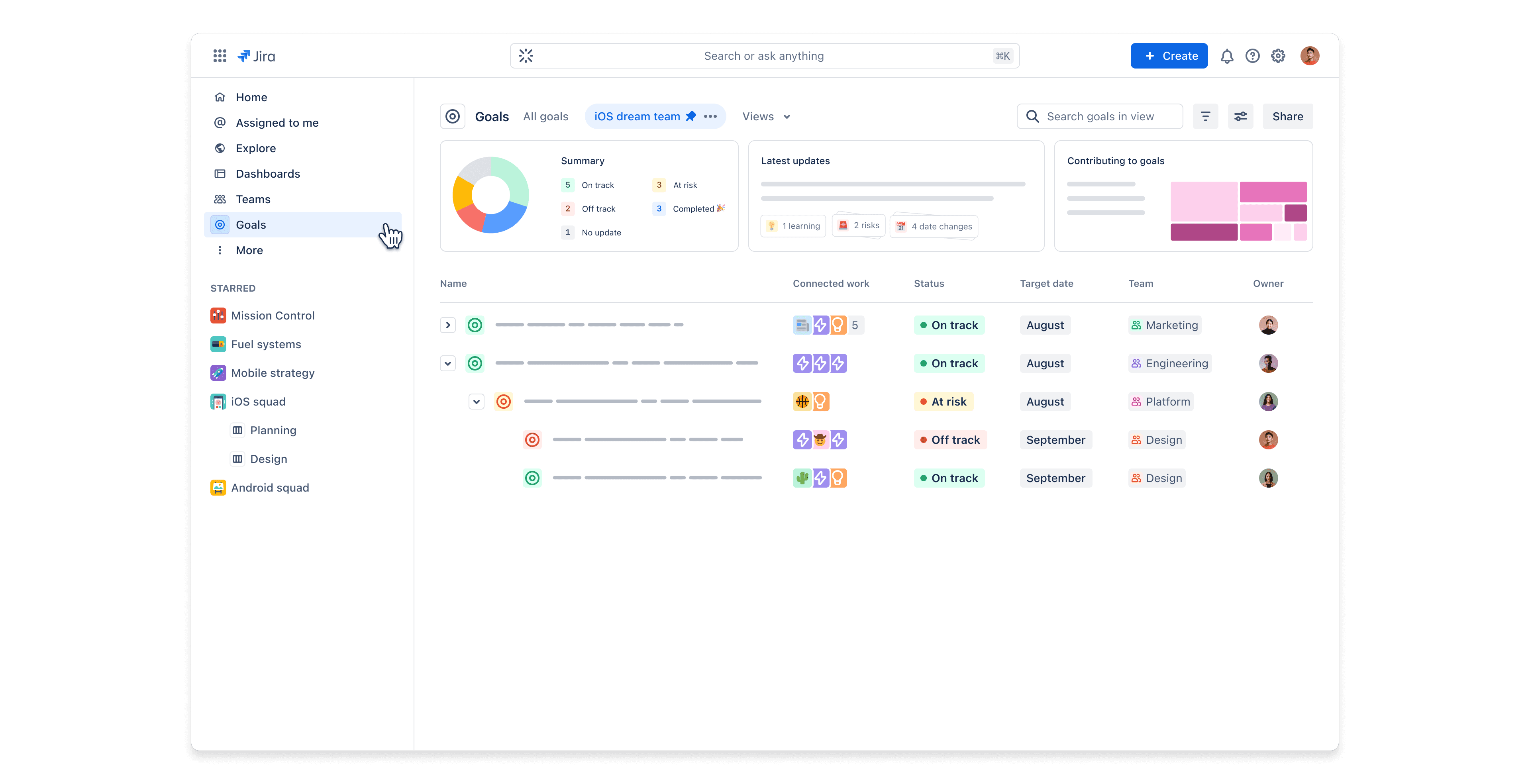
Concept mock for a goals directory within Jira
Impact
The integration was launched at our annual conference, and is a key part of Jira's go to market messaging to align work to goals. We now have 80K monthly active users of goals. The three reusable component patterns I designed have since been used to power goals integration across Jira, Confluence, and new Atlassian apps, giving us more return on our design and engineering investment than a product-specific approach would have.
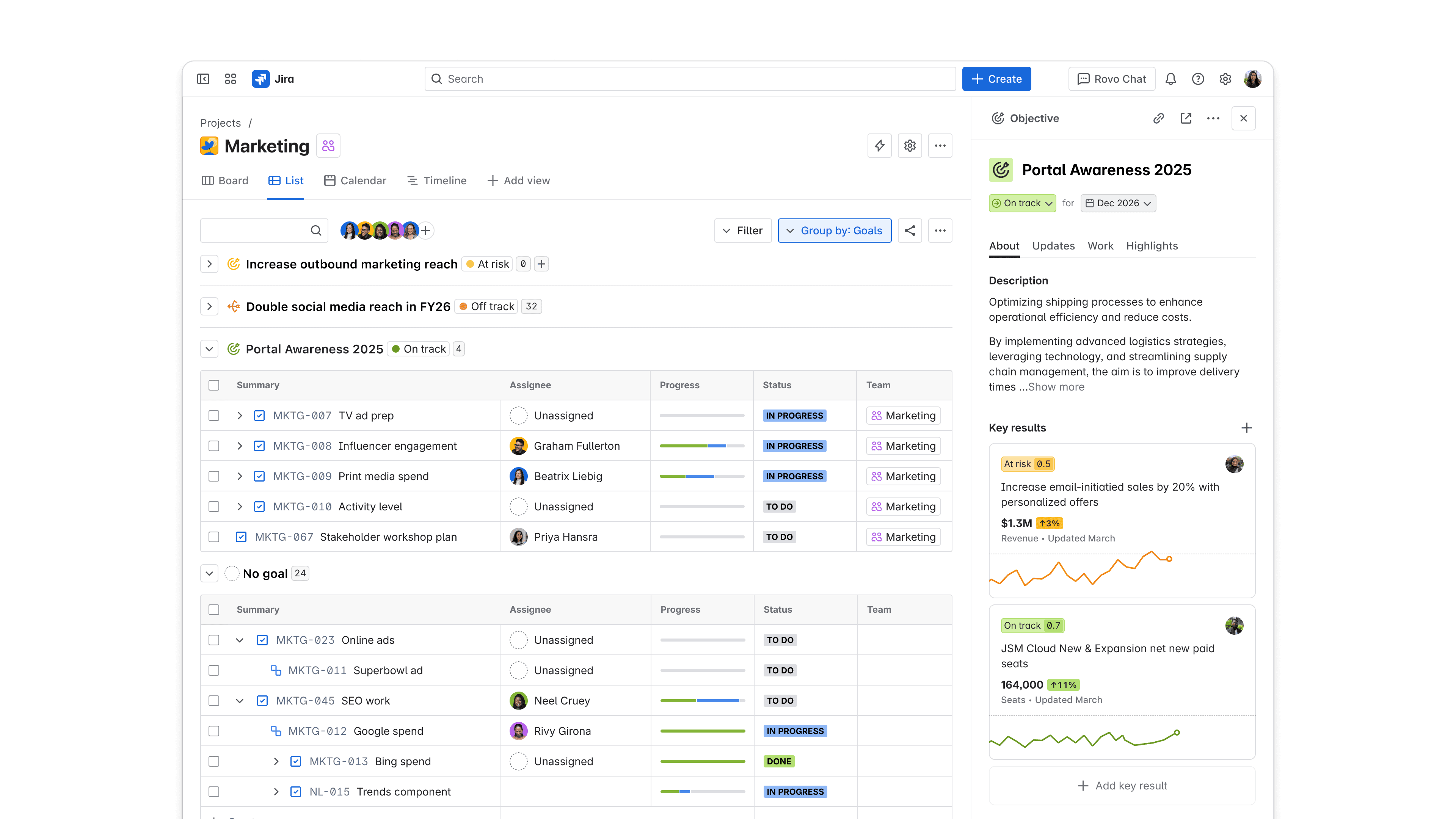
Goals opening in a preview panel. I championed this approach to reduce context switching for our users, and to bring goals closer to wherever users work.