case study
People and team directory
Context
Atlassian saw an opportunity to expand beyond our technical user base with a new staff directory product. Our hypothesis was that proximity to where work happens in Jira and Confluence would give us a strategic advantage over standalone directory tools like Pingboard. While those tools maintained static employee profiles, we could populate directories with what people were actually working on, creating something that stayed accurate and useful without relying on manual upkeep.
I led discovery and design as part of a small incubator team of three people. We moved fast, producing design prototypes and concepts rapidly, then figuring out the best ways to test our hypotheses with what we shipped.
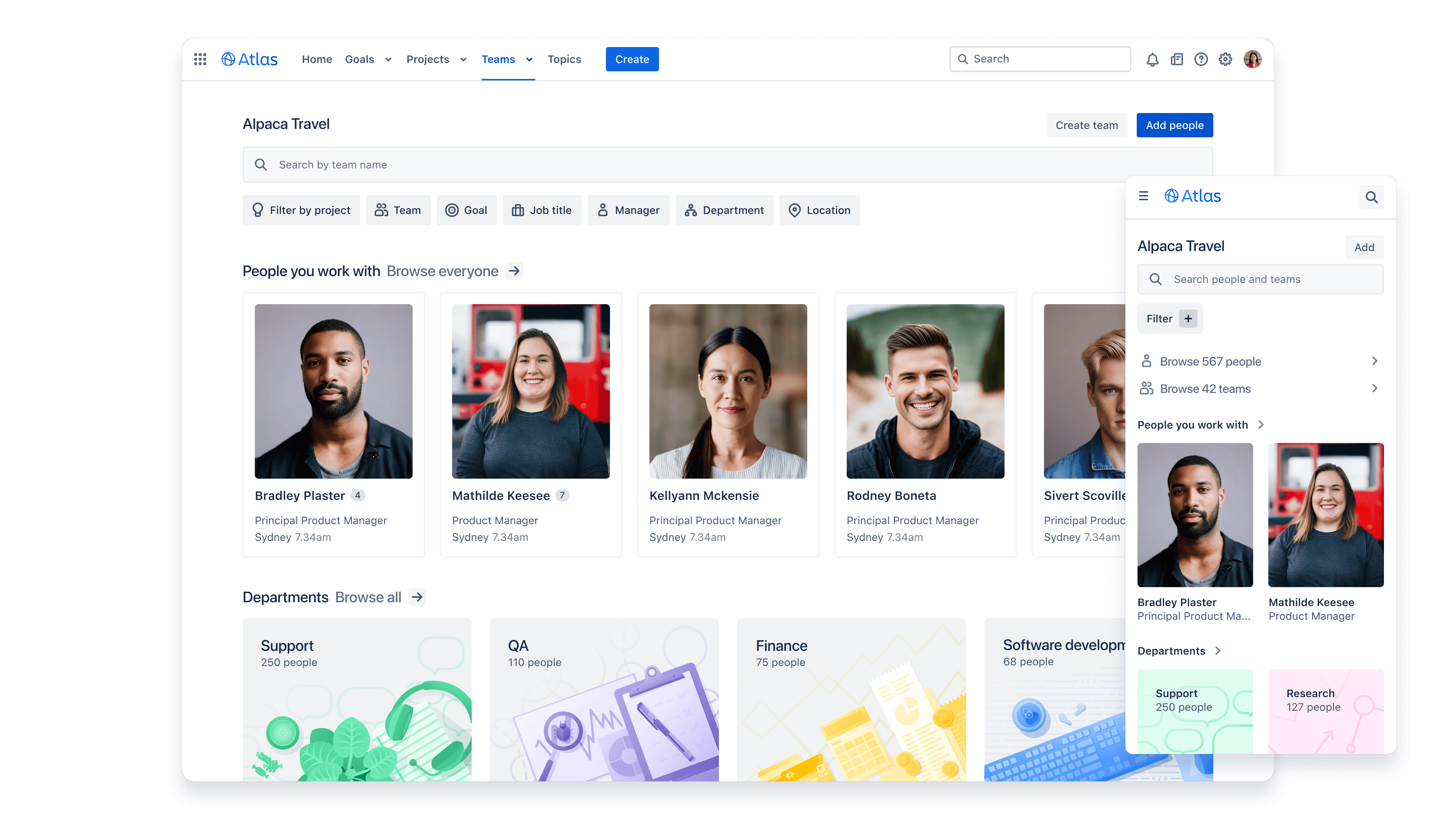
To avoid a 'cold start' problem, we populated the directory with users, teams and created categories like department from existing profile data. I worked with the creative team for card illustrations to represent this in the directory.
Discovery and the cold start problem
In our discovery research, the idea of profiles populated with real project data resonated strongly with users. It was the clearest differentiator from existing tools. But it also created a chicken-and-egg problem: the directory needed to feel useful from day one, before teams had built up a history of work.
To solve this, I designed the initial experience to be pre-populated by pulling in existing users, teams, and categories like department from profile data that was already in Atlassian's system. I worked with the creative team on card illustrations to represent teams and categories visually, so the directory felt rich and browsable even before organisations had invested time in it.
Building the case internally
As a new product, we were regularly presenting for funding. I created prototypes that walked stakeholders through key user journeys, and these were instrumental in securing the initial investment from Atlassian's founders.
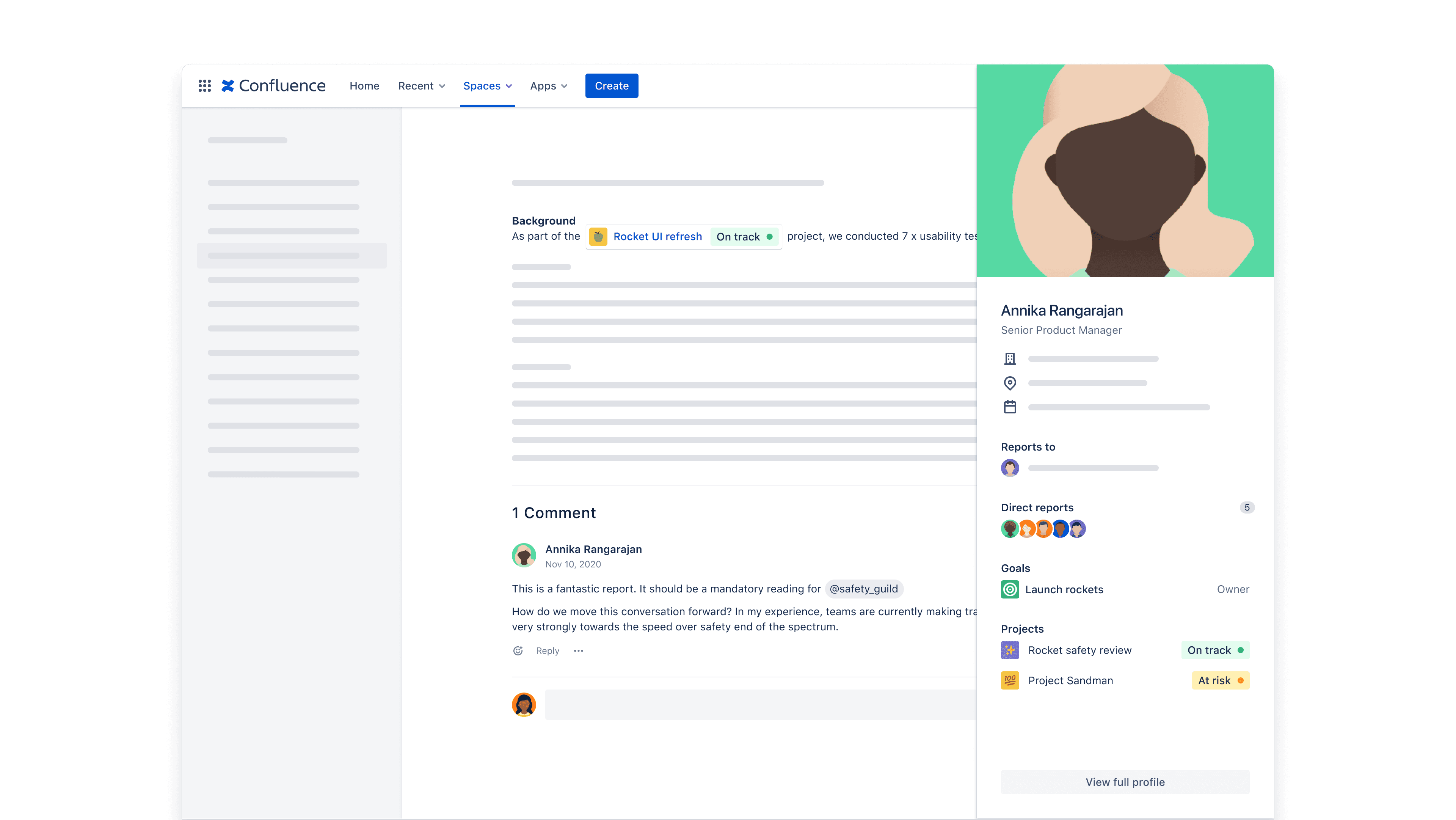
This prototype was used to walk through key journeys, and secure the initial funding from our founders.
Once we had funding, I worked with a squad of developers to build the experience. I took sketches of IA and search patterns directly to the development team to get quick feedback on feasibility before investing in higher-fidelity designs
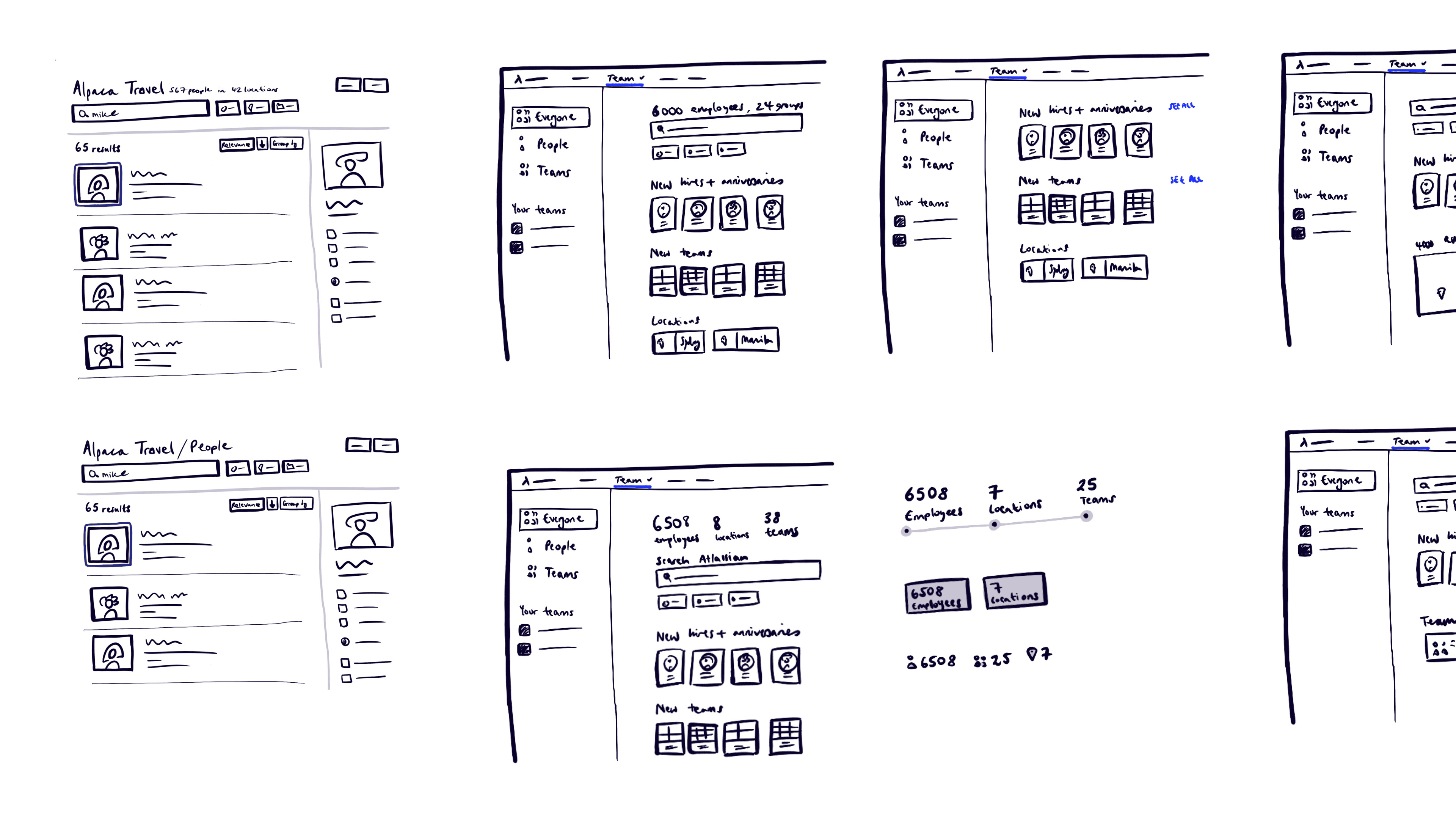
Sketches testing out IA and search patterns which I took to the development team to get feedback and a quick pass on feasability.
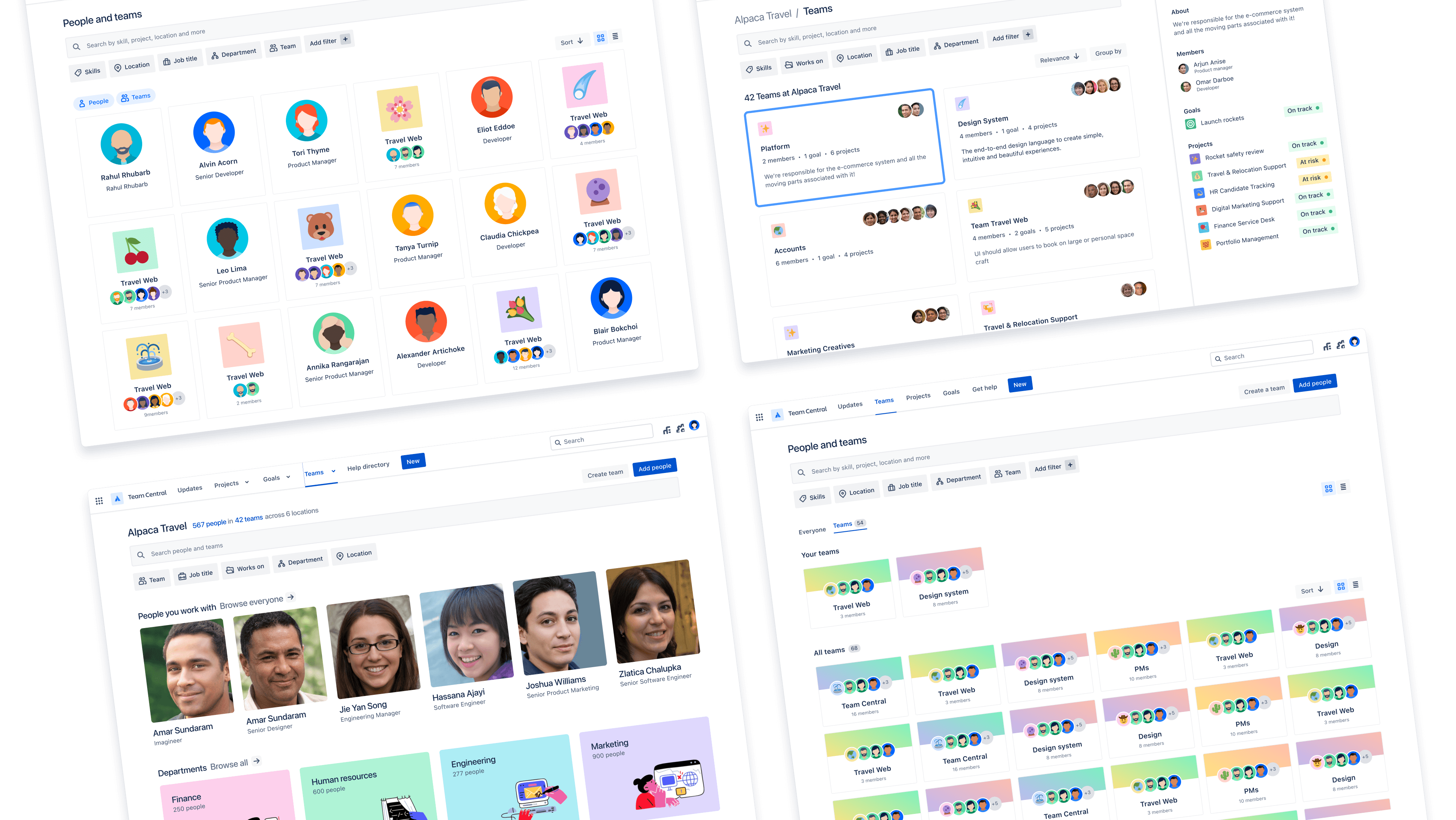
Once we had narrowed the staff directory initial scope to a browse and search experience, I explored different UI variations - playing with details such as the people and team cards.
Search and filter results showed both people and team results.
What we learned
Despite building cross-sell experiences within Jira and Confluence, the standalone staff directory didn't find product market fit. Growth rates stayed low.
Leadership made the call to shift direction, and I helped with design discovery for the pivot to make our product more focussed on goals. But the work wasn't wasted, as the foundations I'd designed for browsing and searching people and teams became the basis of the Atlassian Teams app, which went on to reach 1.4 million monthly active users.